Saturday, 1 October 2011

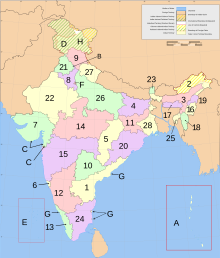
List of states and capital ( India )

States of India and their Capital
No
States
Capital
1
Andhra Pradesh 
Hydrabad 
2
Arunachal Pradesh
Itanagar
3
Assam
Dispur
4
Bihar
Patna
5
Chhattishgarh     
Raipur
6
Goa  
Panji
7
Gujarat     
Gandhinagar
8
Haryana
Chandigarh
9
Himachal Pradesh    
Shimla
10
J&K
Jammu & Shrinagar
11
Jarkhand 
Ranchi
12
Katnataka 
Bangalru
13
Kerela
Thiruvananthapuram
14
Madhya
Bhopal
15
Maharashtra
Mumbai
16
Manipur
Imphal
17
Meghalaya
Shilong
18
Mizoram
Aizwal
19
Nagaland
Kohima
20
Orissa
Bhubenswar
21
Punjab
Chandigarh
22
Rajesthan
Jaipur
23
Sikkim
Gangtok
24
Tamil Nadu
Chhenai
25
Tripura
Agratala
26
Uttar Pradesh
Lakhnow
27
Uttrakhand
Dehradun
28
Pachim Benga
kolkata
29
New Delhi
Delhi


Union Territories: Div & Daman, Dadara & Nagar Haveli, Andaman & Nicobar, Puducherry,                           
                             Chabdigarh, Delhi 

Friday, 23 September 2011

Markets lose faith in the Fed

It’s like the children’s rhyme. Ben Bernanke sneezed and they all fell down. By the end of the day, the Indian currency’s 2.5% depreciation against the dollar was worsted only by that of the Korean won in the Asia-Pacific region. 
            

Similarly, only Jakarta and Hong Kong did worse than the Indian equity markets, which fell 4%. The weakness in the equity and forex markets fed off each other. 


Thursday’s slide was a bit extreme as investors ran towards the dollar after the US Federal Reserve chairman talked about the “significant downside risks to economic outlook”. As one has seen before, and perhaps paradoxically, that prompts investors to see dollar as a safe haven. This, plus an arbitrage opportunity with offshore non-deliverable forward markets, has squeezed the local currency down.


It could get worse as banks start deleveraging and liquidity problems are exacerbated around the world. We are already seeing some evidence. Banks and investors are moving away from riskier assets and some Asian markets have fallen as deeply as 22% since the start of 2011. The benchmark Sensex index of BSE is not far behind at 20%. Net foreign portfolio investment in India totals a measly $622 million (around Rs. 3,050 crore today) so far this year. 


Graphic by Naveen Kumar Saini/Mint
As a result, the rupee has been depreciating for quite some time now. Year-to-date, the local currency slid by 9.83%, the worst among Asia-Pacific currencies. Another reason for the decline is the widening, and structural, current account deficit, which clocked in at 3.4% of the economic output last quarter.


 While exports have been rising at record levels in recent months, these may not be sustainable in the future. At the same time, India continues to be a net oil importer, and the import bill is unlikely to come down by the same extent. 


 These factors will continue to put pressure on the local currency in the near term. The central bank’s ability to intervene in the market is also limited by local liquidity conditions; banks are still net borrowers under the liquidity adjustment facility and the whole situation is exacerbated by the government’s cash deficit position. 


 A corollary to this is the concomitant decline in equities. A Macquarie Capital Securities India (Pvt.) Ltd study shows Indian stocks and currency are highly correlated. Simply put, stocks gain when the rupee is appreciating and vice-versa.


 Not that equities want more reasons to tank. The European Systemic Risk Board has issued a warning similar to the US about increasing risks in the financial system—an ominous reminder of the Lehman collapse.


 Flash purchasing managers’ indices show the manufacturing sector contracted in China this month. Both manufacturing and services contracted in the euro zone, the first time in two years.  


Perhaps more importantly, markets focused on the negative aspect of the Fed Open Markets Committee statement, ignoring its larger-than-expected purchase programme of long-term bonds that is supposed to stimulate the US economy.


 The bad news is the markets seem to be rapidly losing their trust in policymakers.


Sources: LIVE MINT